
Register Your Rental Property: What Landlords Need to Know About the Renters’ Rights Act

Jessica Holman
Sep, 17 2026The next phase of the Renters’ Rights Act has now been announced with the introduction of the “Register Your Rental Property” service, previously referred to as the Private Rented Sector Database. Registration will be a legal requirement for landlords, and failure to comply may result in financial penalties.
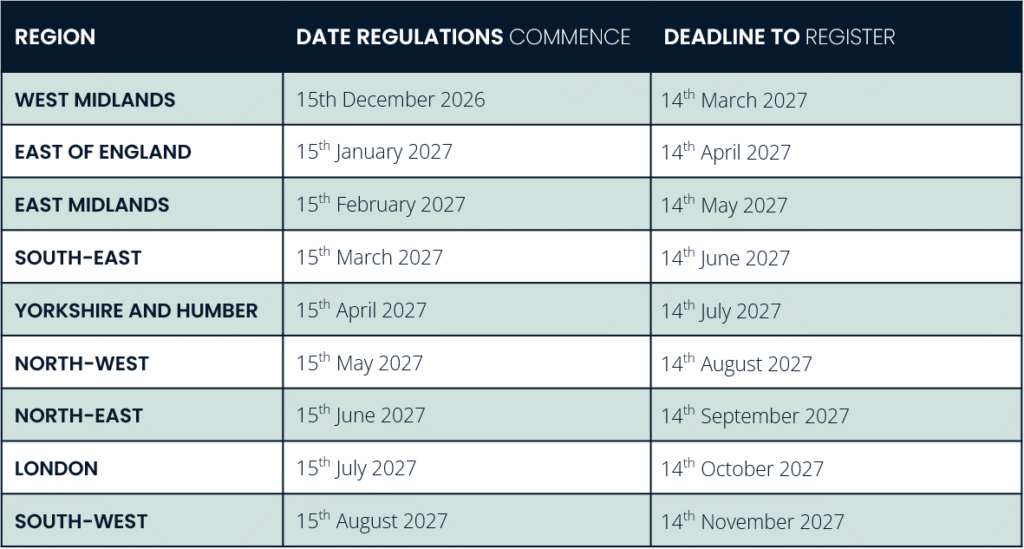
The Government has confirmed a phased regional rollout commencing on 15th December 2026, starting in the West Midlands and extending across the remaining regions over a 12-month period. This phased approach is intended to manage demand on the system. All landlords with properties actively let will be required to register them by 14th November 2027.
Initially, the requirement will apply only to properties that are currently let or become occupied during the rollout period. Future legislation is expected to extend the requirement to vacant rental properties before they are marketed for letting. At that stage, property registration numbers will need to be included in advertisements. Further guidance on these requirements is expected in due course.
Below are the dates from which you are legally required to register. If you have properties in multiple regions and would like to register them all at once, you will be able to do so.
Registration Timeline
Fee
A registration fee of £65 per property, per year will apply, with registration requiring annual renewal. The fee will be payable separately for each property registered.
Information Required
Landlords will be required to provide details for each property, including the property address, number of bedrooms, number of occupants, and the rent being charged. Copies of all relevant safety certificates and the EPC will also need to be uploaded as part of the registration process.
A full list of the required information can be found here: Get ready: ‘Register your rental property’ service – Housing Hub
The Government has indicated that information made available to tenants and the public will be balanced against landlords’ privacy concerns. Further guidance confirming which details will be publicly accessible is expected in due course.
What Should I Start Doing Now?
Landlords should start preparing now rather than waiting for registration to open. This includes reviewing each rental property to ensure key information, tenancy documents and compliance records are complete and up to date, while identifying and addressing any gaps early.
Taking these steps now should make the registration process much smoother when the new requirements come into force, helping to save time and avoid unnecessary delays.
How Does This Fit with the Wider Renters’ Rights Act?
The Database is only one part of the wider Renters’ Rights Act, with reforms being implemented in stages.
The most significant changes came into force on 1st May 2026, including:
- The abolition of Section 21 “no-fault” evictions.
- The end of fixed-term assured shorthold tenancies, with tenancies moving to a periodic model.
- Reforms to Section 8 possession grounds.
- New procedures for rent increases.
- Restrictions on rental bidding and the taking of rent in advance.
What Is Still to Come?
Further reforms are expected to be introduced over the coming years, including:
- The Private Rented Sector (PRS) Landlord Ombudsman, which will provide tenants with a route to resolve complaints and disputes.
- Awaab’s Law, introducing stricter requirements and timescales for landlords to investigate and remedy serious health hazards such as damp and mould.
- The Decent Homes Standard, which will establish minimum quality standards for privately rented homes.
Need Advice on the Renters’ Rights Act?
The introduction of the Register Your Rental Property service is just one of a number of significant changes affecting landlords. If you would like guidance on preparing for registration, understanding your compliance obligations, or navigating the wider implications of the Renters’ Rights Act, get in touch with the Ceres Property team. We can help you stay informed and ensure you’re prepared for the changes ahead.
Relevant Service Areas